


The absence of visibility in search engines indicates a deficient technical infrastructure. Google prioritizes platforms that offer quick access to information. A slow or hard-to-index site loses ranking positions regardless of the quality of textual content.
Digital competition in 2026 allows no latency. Users and algorithms immediately penalize waiting times.
Core Web Vitals and the Dictatorship of Speed
Current algorithms measure performance through Core Web Vitals metrics. These are not suggestions, but direct ranking factors. The most critical indicator is Largest Contentful Paint (LCP) - the time needed to display the largest visual element on the page.
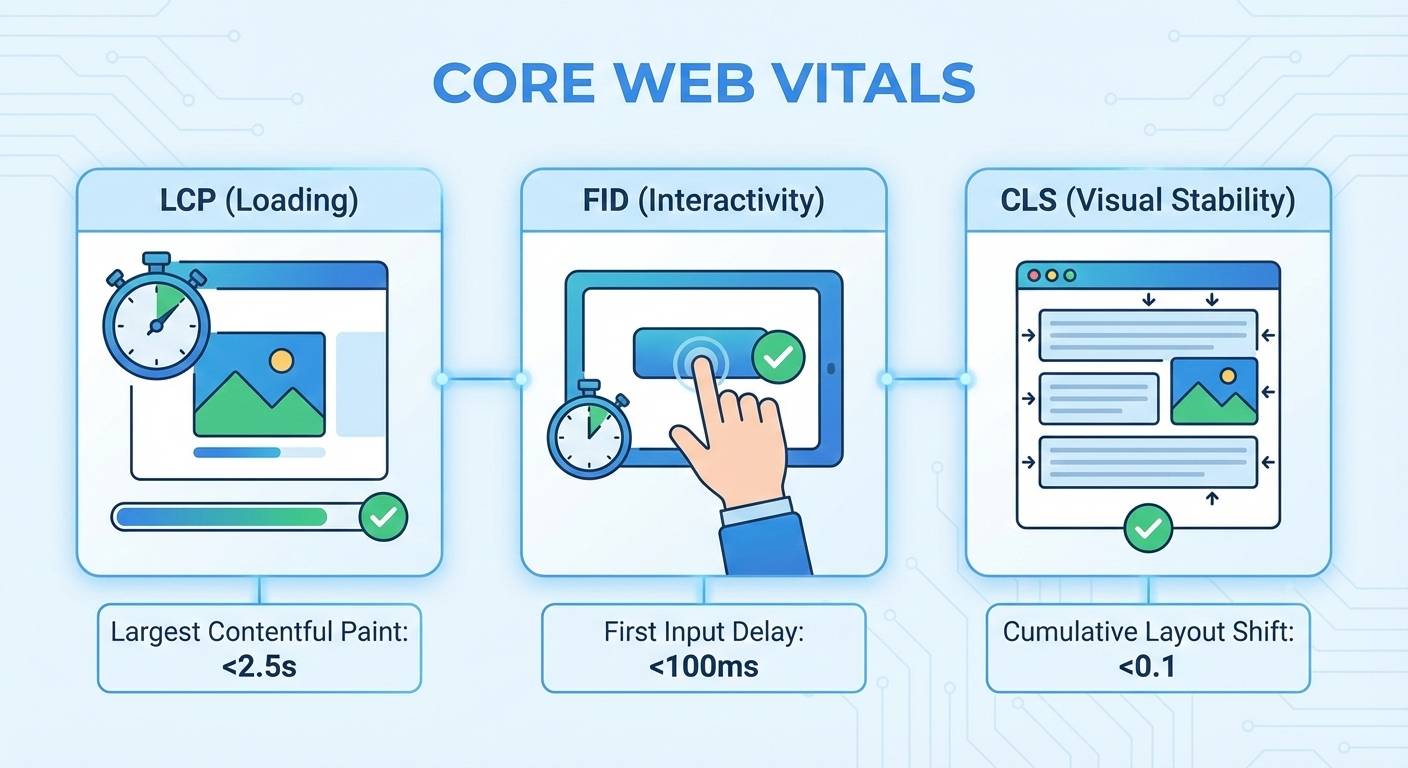
Any delay above the 2.5-second threshold drastically reduces the chances of ranking on the first page. The mechanism is simple: users leave slow sites before they fully load.
Google detects this high bounce rate and downgrades the domain, considering it irrelevant or dysfunctional.
The Browser Rendering Problem (Client-Side Rendering)
Many modern platforms, built on popular but unoptimized frameworks, exclusively use Client-Side Rendering (CSR). This method forces the user's browser and Google bots to download and execute large amounts of JavaScript before the page becomes readable.
To a Google crawler, a CSR site initially looks like a blank page. If script execution takes too long, indexing is incomplete or fails completely.
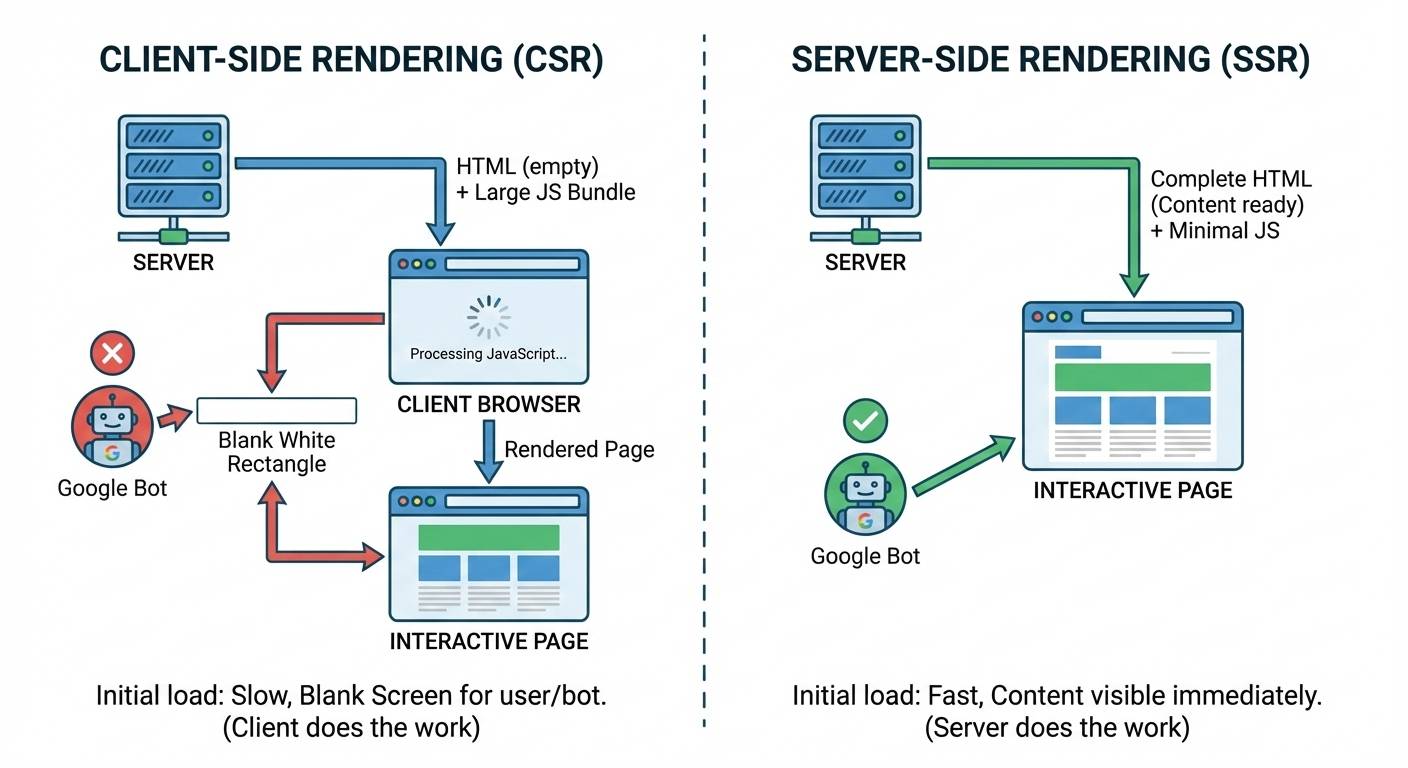
Next.js eliminates this bottleneck by using Server-Side Rendering (SSR). The server generates the complete HTML before delivery, allowing immediate indexing of content, structure, and links.
Monitoring Indexing: Google Search Console and Bing Webmaster Tools
Visibility in search engines requires active monitoring through technical diagnostic tools. Google Search Console (GSC) is the main data source for identifying indexing and coverage issues.
The platform reports pages that cannot be explored due to:
- server errors
- incorrect rendering configurations
- blockages in the
robots.txtfile
Using Google Search Console allows:
- Submitting Sitemap files: guiding bots to all relevant pages of the site
- Identifying indexing errors: detecting pages returning 404 or 500 error codes
- Analyzing search performance: monitoring the keywords that generate organic traffic
The digital ecosystem also includes other search engines. Bing Webmaster Tools fulfills a similar function for the Microsoft search engine, providing additional information about:
- backlink quality
- crawl issues
- compliance with web standards
Information Architecture and Technical SEO
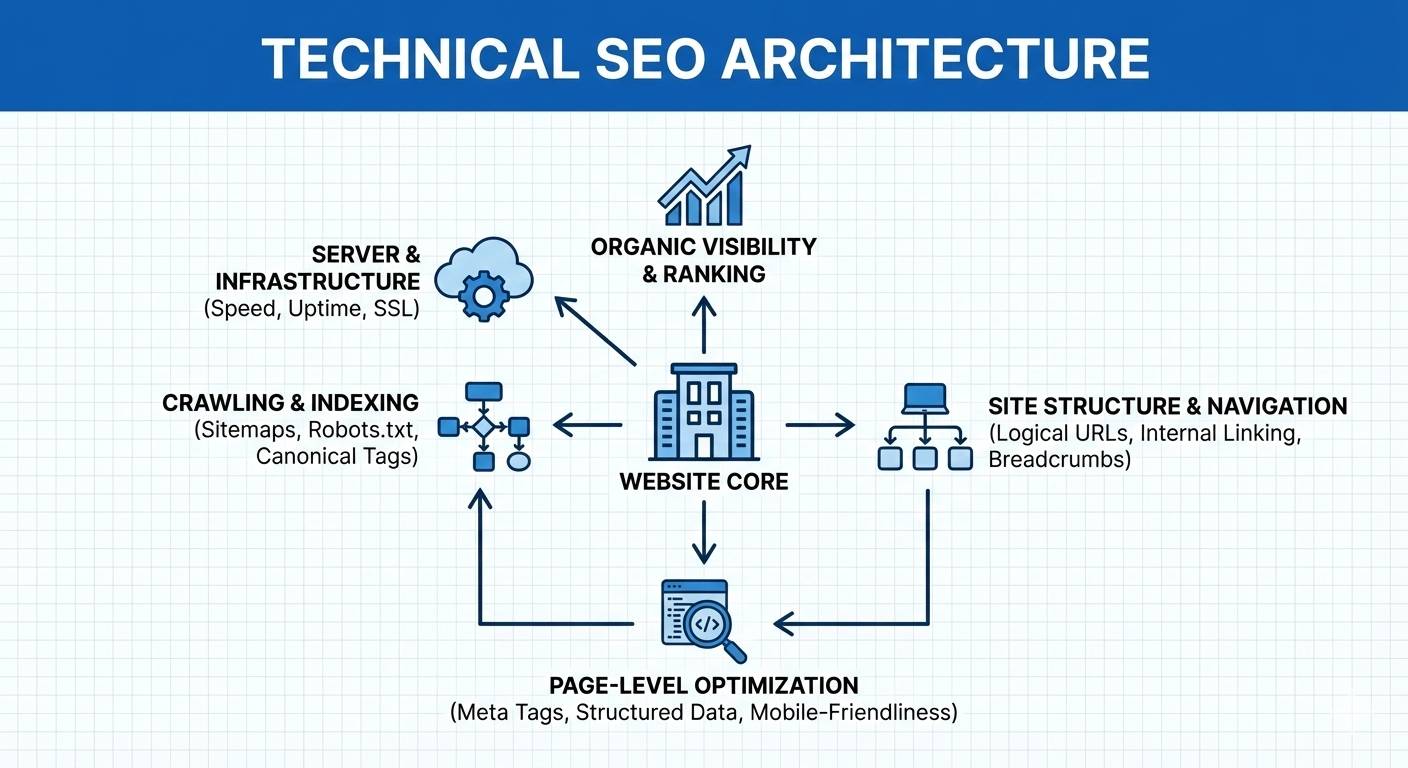
Speed is a necessary condition, but not sufficient. Google requires a logical and semantic structure to evaluate a page's relevance. Modern SEO is a technical discipline, not an exercise in keyword stuffing.
Critical elements for technical SEO include:
- Semantic hierarchy: correct use of H1–H6 tags for content structuring
- Dynamic metadata: unique titles and descriptions, automatically generated for each page
- Internal link structure: efficient distribution of SEO authority between pages
Prezent Digital implements these elements directly in the source code. This approach eliminates dependence on external SEO plugins that slow down the platform and create performance conflicts.
Conclusion
Loading speed and indexing capability are the pillars of online visibility. A platform built on outdated technologies or unoptimized templates will remain invisible, regardless of the budget allocated to marketing.
Technologies like Next.js with Server-Side Rendering ensure compliance with current technical standards and offer a real competitive advantage in Google.
Request a technical analysis of your site to identify the barriers preventing proper indexing and SEO performance.